What to build

Building is easy now. Knowing "what to build" is the AI age superpower. But how can we know that? In 7 steps.
I should start playing the prediction markets. 27 months ago I wrote about "taste" as the important thing.
25 months ago I wrote about "ideas" being more important than execution.
Boy oh boy have those predictions come true.
So now that "I just built a..." has become the most popular opening sentence of all time, here is my practical step-by-step to validate our ideas using AI:
Step 1: Give the idea a home
Create it as a real project with a status: exploring, validated, active, or paused. AI makes it easy to create scattered research, names, landing pages, ads, and strategy docs. The idea needs one place where everything lives.
Step 2: Look for signal before building
Before touching the product, search the web for competitors, reviews, old attempts, new launches, and category language.
Search Reddit for the raw version of the pain. That is where people say things like: "I hate that…", "Does anyone know a tool for…", "Why is this so expensive…"
Then check Google Trends to see whether interest is growing, flat, seasonal, or mostly imaginary.
At this stage, I’m looking for people complaining, people paying, and people searching. We don't need all three, but if we have none, that is probably the answer.
Step 3: Save the research
Most AI research dies in chat history. Save real research notes against the idea: customer language, repeated complaints, competitor weaknesses, pricing observations, positioning angles, and open questions.
Step 4: Validate it simply
Once there is some signal, score the idea on five things: market demand, competition, feasibility, revenue clarity, and customer reach.
Customer reach is the one people skip. A good idea can still be a bad business if the customer is too hard to reach.
Step 5: Find the wedge
Look for the wedge: simpler, cheaper, more premium, more focused, more opinionated, or built for a customer everyone else treats as an edge case.
Step 6: Build a landing page with a waitlist
Name it after the research, not before. Check domains. Create a basic brand direction. Then build the landing page.
A page forces the idea to become clear. Use the research notes, competitor gaps, customer language, and brand direction to publish a real page with email collection for waitlist.
Not as a launch. As a test.
Step 7: Test the message
Once the page is live, test a few angles through organic posts, direct outreach, small Meta ads tests, or Google ads keyword tests.
Early ads are not acquisition. They are research. Clicks tell us something. Waitlist signups tell us more. Replies tell us the most.
The question is no longer "can I build this?"
Of course I can. The better question is: has this idea earned the right to be built?
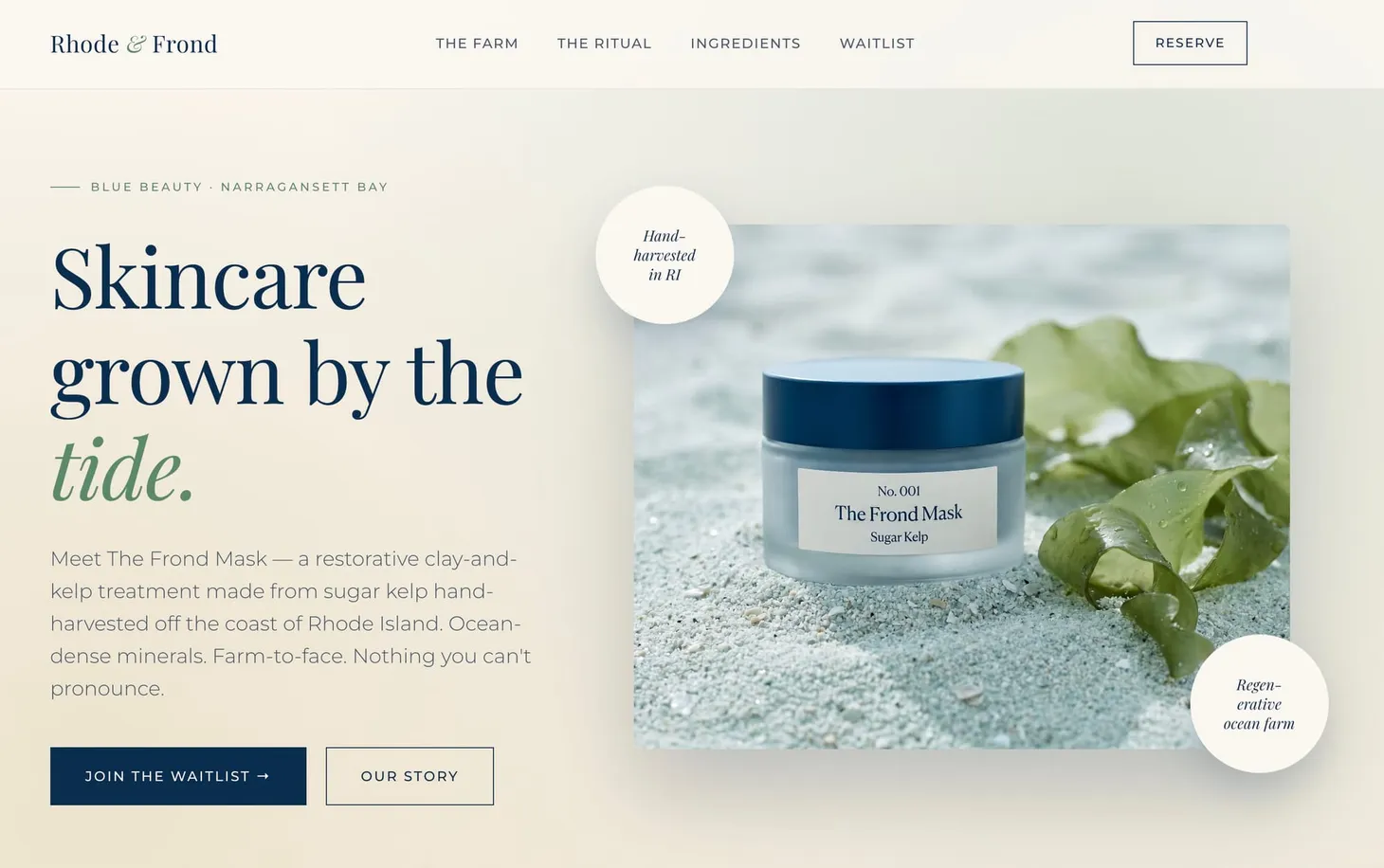
PS: You can do all of the above in a Telegram/Slack chat using gentic.co/startup That's how I found and validated my sea kelp mask idea that I'm now pursuing.

Maker's Wave Newsletter
Join the newsletter to receive the latest updates in your inbox.