Beyond Eureka!: The Rocky Roads to Innovating with Marylene Delbourg-Delphis


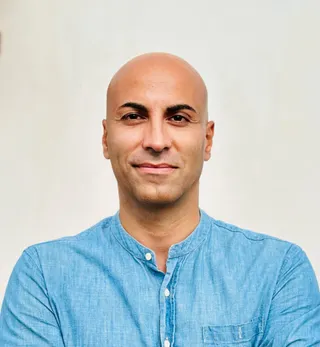
In this episode, I talked to Marylene Delbourg-Delphis about her book "Beyond Eureka!: The Rocky Roads to Innovating"
Listen on: Apple Podcasts | Spotify | RSS Feed
My takeaways from our chat:
- Marylene is one of the first European women to have founded a tech company in Silicon Valley. She's been awarded the French Legion of Honor, the highest order of merit for civic and military accomplishment. She has a PhD in philosophy and has helped over 30 companies as a shadow CEO or board member.
- She started in tech by creating a relational database for her research on the history of perfumes. This led her to start a company in France and later in Silicon Valley with co-founder Guy Kawasaki.
- Marylene helps other entrepreneurs to avoid tunnel vision and to understand her own problems as a CEO. She recommends all CEOs talk to and help other CEOs.
Writing the Book
- The book addresses questions related to innovation that Marylene had herself as an entrepreneur and that other entrepreneurs frequently ask her.
- Instead of a broad dissertation on innovation, the book analyzes innovation from the perspective of specific questions - what differentiates inventors vs innovators, disruptive vs sustaining innovation, competing products, timing, women's impact, etc.
Bootstrapping vs VC Funding
- Bootstrapping allows testing variations of the product in the beginning. But more resources may be needed if something is picking up.
- VC funding makes sense if you know what you're doing and are comfortable with VCs who may not understand the business deeply. It depends on the specific business.
Innovators vs Entrepreneurs
- Not all startups are innovative. Marylene distinguishes between entrepreneurs and innovators in her book.
Kairos (Timeliness)
- Kairos is a Greek word reflecting that when starting something, the world is composed of multiple layers, each with its own tempo. Creators must decide which layer to address.
- Some innovations strike a chord with slow-moving ideological layers that don't compel immediate purchase. Others, like Bill Gates' OS, match the fast pace of frequent enterprise upgrades.
Complexity of Customers
- Innovators hope their eureka moment will translate into a wow moment for customers. But people live on their own "planets" with complex, multi-layered minds.
- Segments that should buy the product often have different timings and agendas than expected. Pre-mortems are useful to anticipate reasons for delayed purchases.
Power of Small Innovations
- Most innovations start small, as part of an "innovation stack" of building blocks that enable bigger breakthroughs. Being a trailblazer, even in a small way, makes a real difference.
- The innovation kairos acts as a grinder - original plans and criteria for success often change along the way. Embarking on innovation is a treasure hunt without guaranteed success.
Disruption
- Marylene argues "disruption" is outdated jargon not useful as an innovation methodology. Products succeed by creating value and seducing customers, not destroying incumbents.
- Even Kodak, often cited as disruptive, emerged from a mess of trial and error in photography, not a clear aim to disrupt.
Micro-Management
- Great innovators like Steve Jobs and Bill Gates were extremely detail-oriented. Attention to the smallest details is critical for innovation to avoid product-breaking flaws.
- "Micromanagement" has a bad reputation among non-innovative financially-oriented CEOs who don't want to focus on product details. But innovators must.
Other Key Concepts
- Thinking Thick - considering all the complex implications and causal systems around what we do. Simplification comes after complexity.
- Multidisciplinary Brain - cultivating imagination by reading widely, appreciating arts/music, going to exhibitions. Puts the mind in a different place.
- Pivoting - repurposing efforts when things aren't working as originally planned. Requires creativity and intellectual honesty.
Maker's Wave Newsletter
Join the newsletter to receive the latest updates in your inbox.