My AI roasted my health habits
And it was more useful than any health app I've ever tried.
Claude 4.6 just dropped and it's genuinely great at data analysis. So I pointed it at something personal.
Over the past few months I've been storing my daily weight, meals, exercise, and sleep data in Arca. Raw life data with proactive AI Mio tracking everything through conversation.
Separately, I vectorized 200+ Huberman Lab podcast transcripts into a searchable knowledge base. So Mio can do semantic searches across everything Andrew Huberman has ever said on a topic.
Then I connected the two.
I asked Mio to analyze my last 30 days of health data against Huberman's protocols. It pulled my numbers, searched for the relevant Huberman recommendations on sleep, exercise, nutrition, and caffeine timing, and generated a full personalized analysis.
Here's what it found.
The Roast
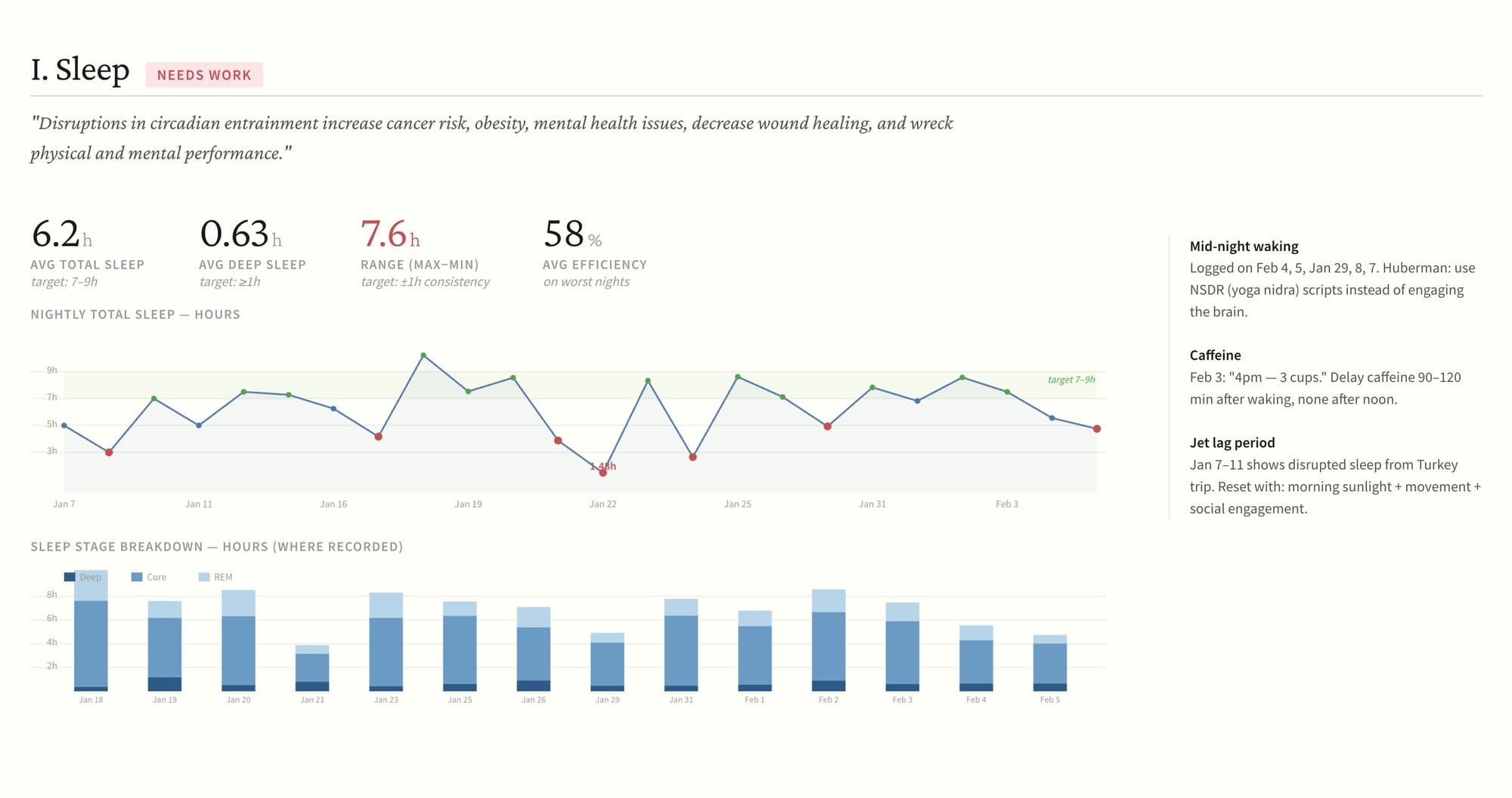
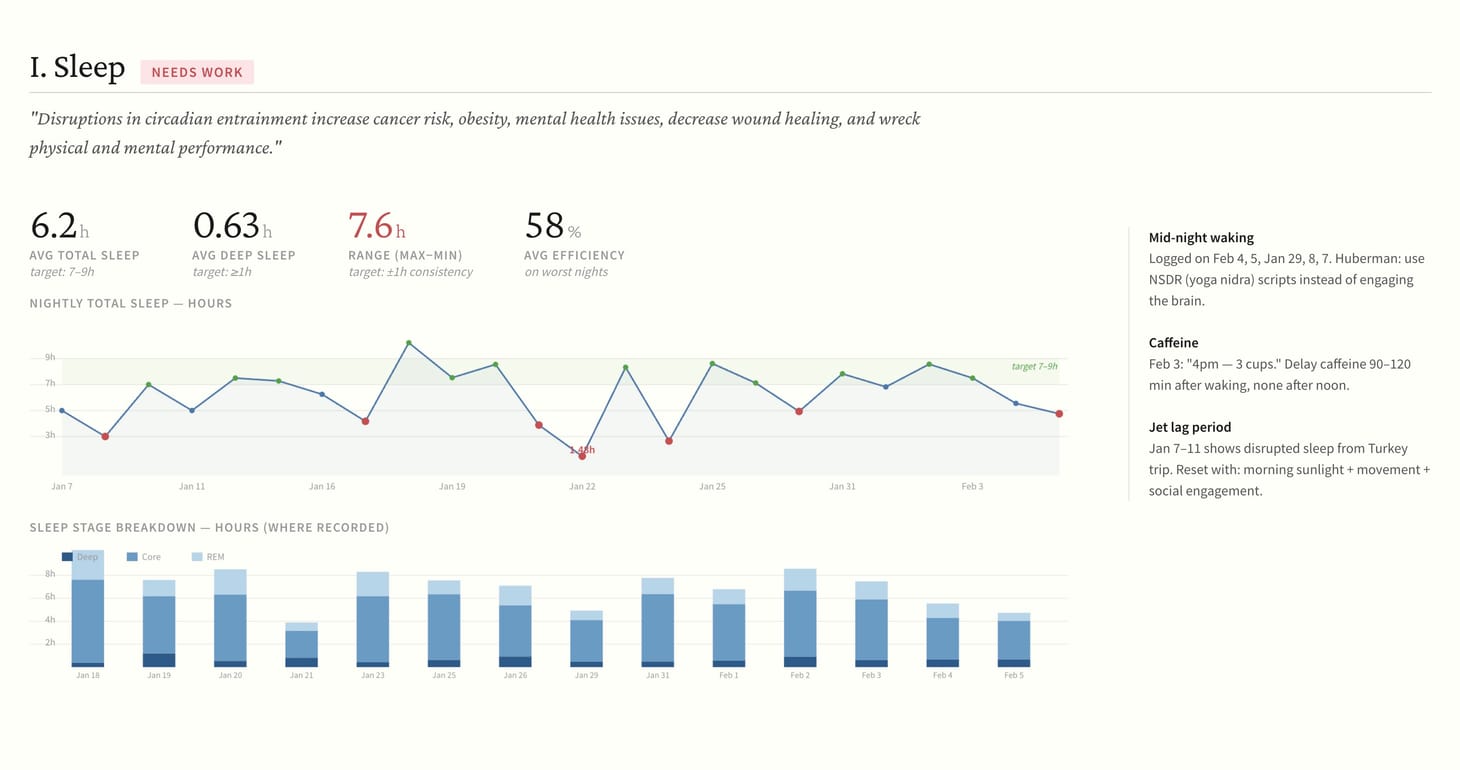
Sleep was the biggest problem. No surprise, but the numbers were rough.
6.2 hours average. Target is 7 to 9. A 7.6-hour swing between my best and worst nights. Huberman says consistency matters as much as the average. Deep sleep averaging 0.63 hours when the target is at least 1 hour. And my classic move: waking up mid-night and reading, which is basically the opposite of what you want to do.
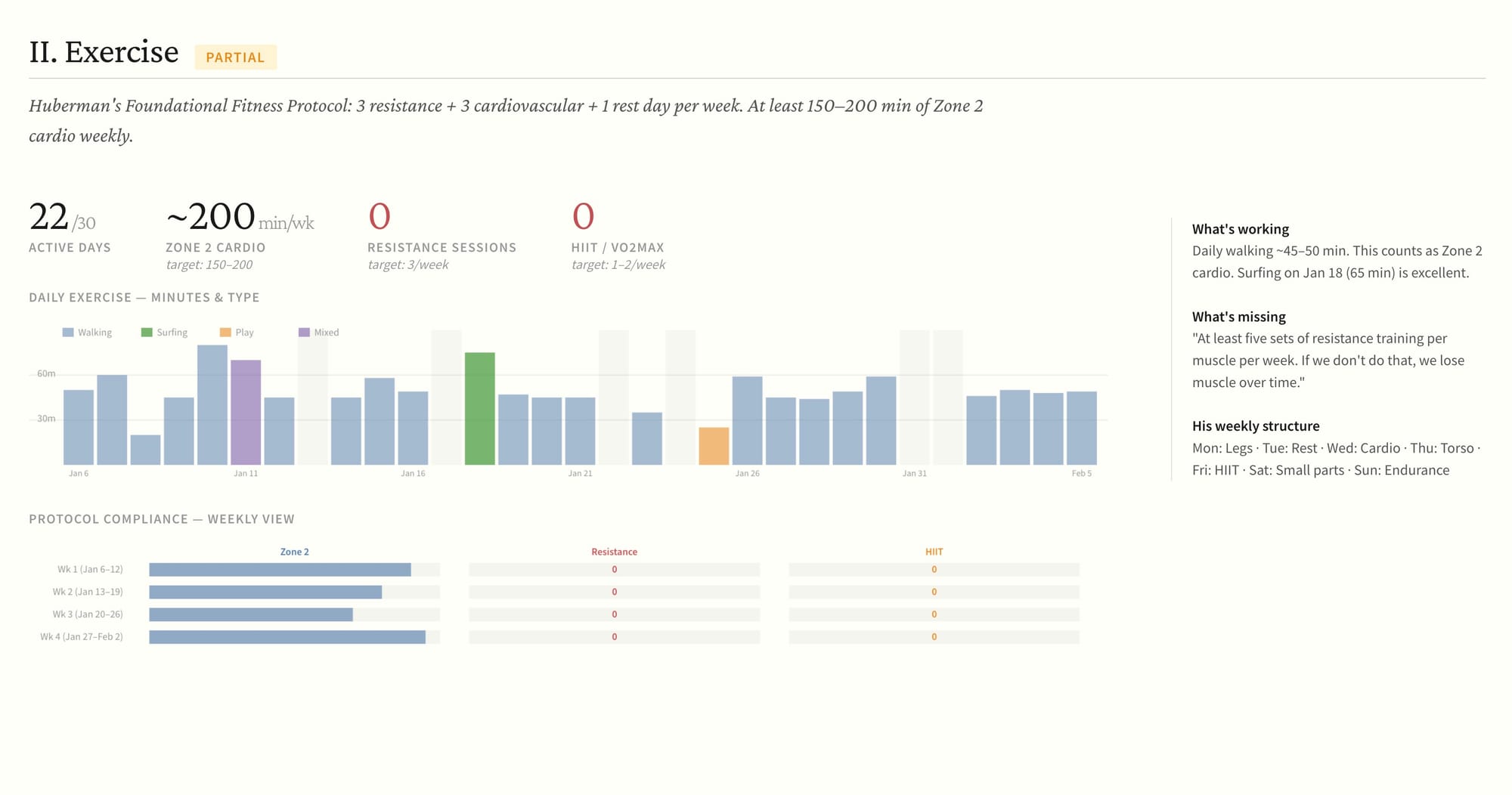
Exercise looked okay on the surface. 22 out of 30 active days. About 200 minutes per week of Zone 2 from walking. But zero resistance training sessions and zero HIIT or VO2max work. The walking was good. The rest was a big miss.
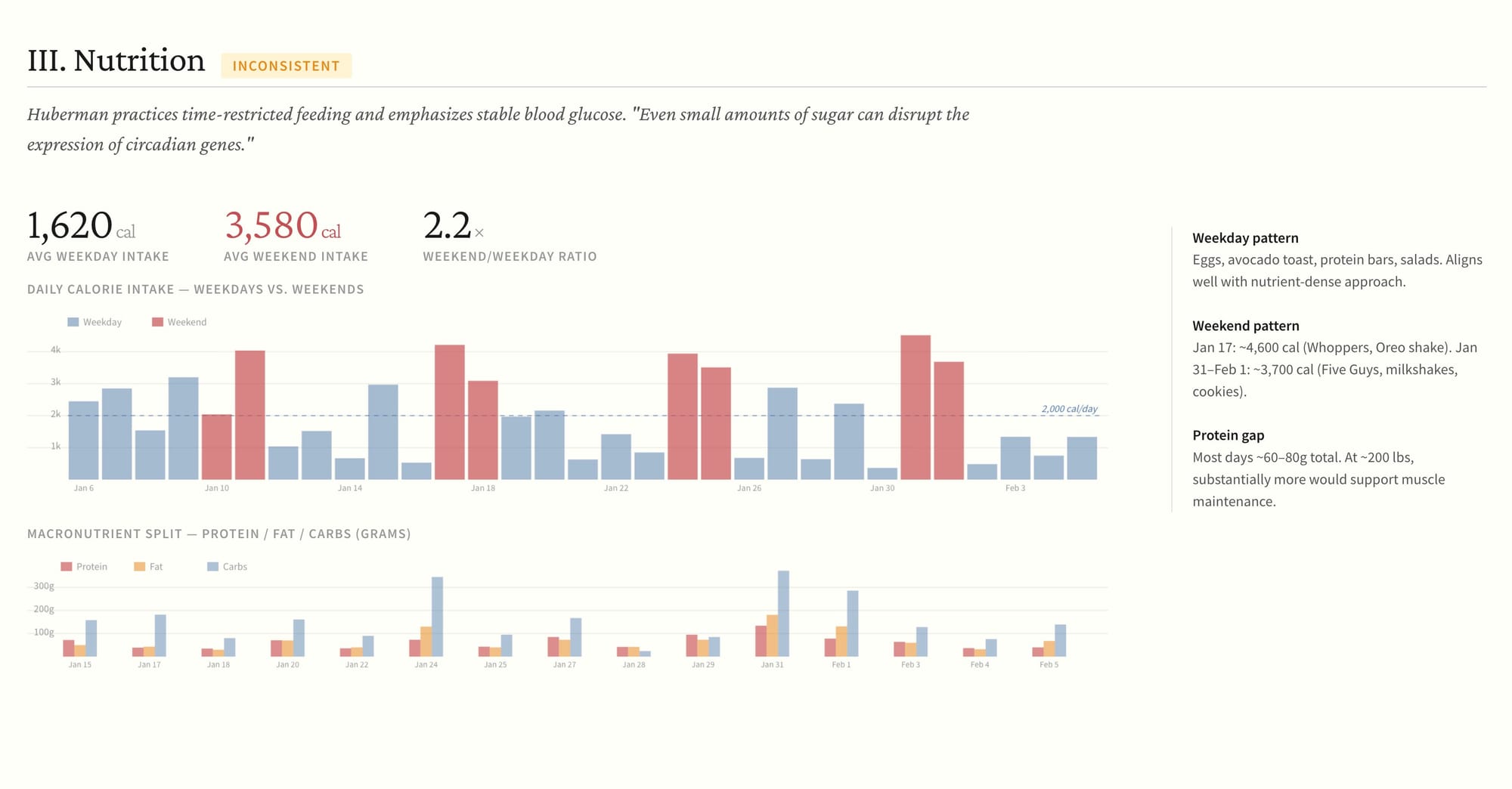
Nutrition told a split personality story. 1,620 average weekday calories versus 3,580 average weekend calories. A 2.2x swing. Mio flagged this as a likely driver for both sleep disruption and weight volatility.
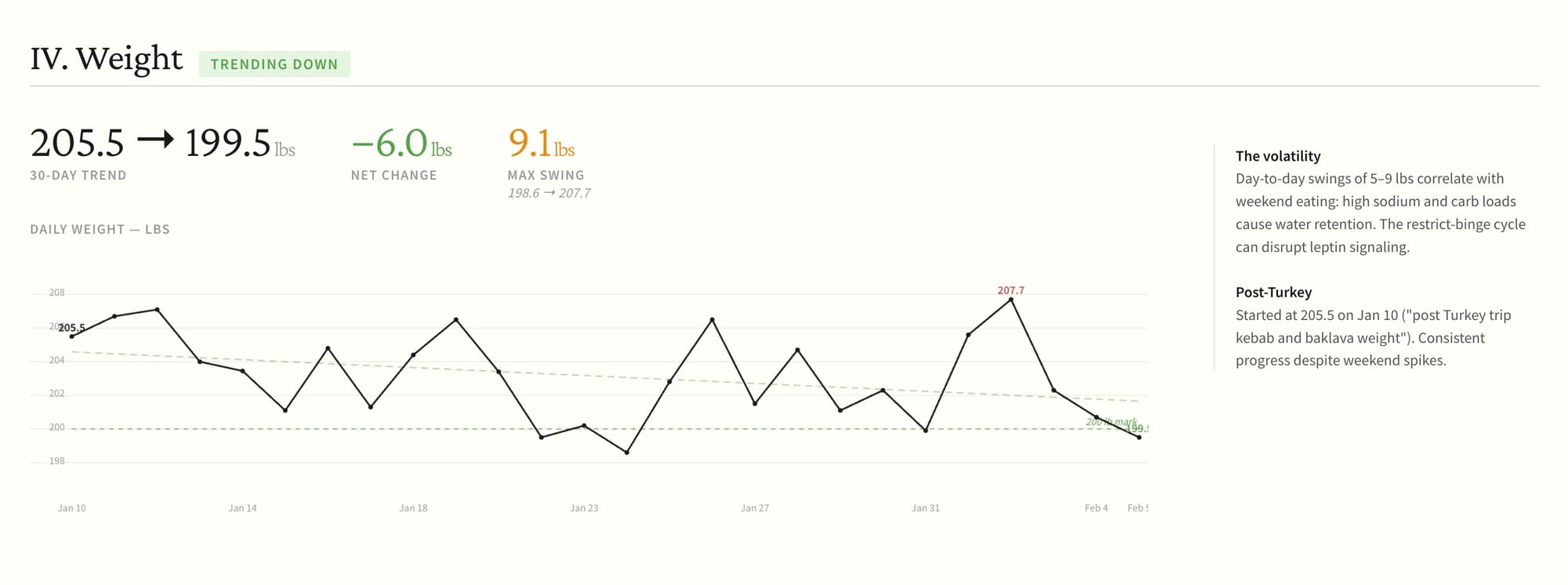
Weight was trending down anyway. 205.5 to 199.5 in the window. Down about 6 pounds. But with big swings from water retention and weekends.
The Recommendations
Mio scored me and it also pulled the specific protocols from the Huberman transcripts that matched my situation.
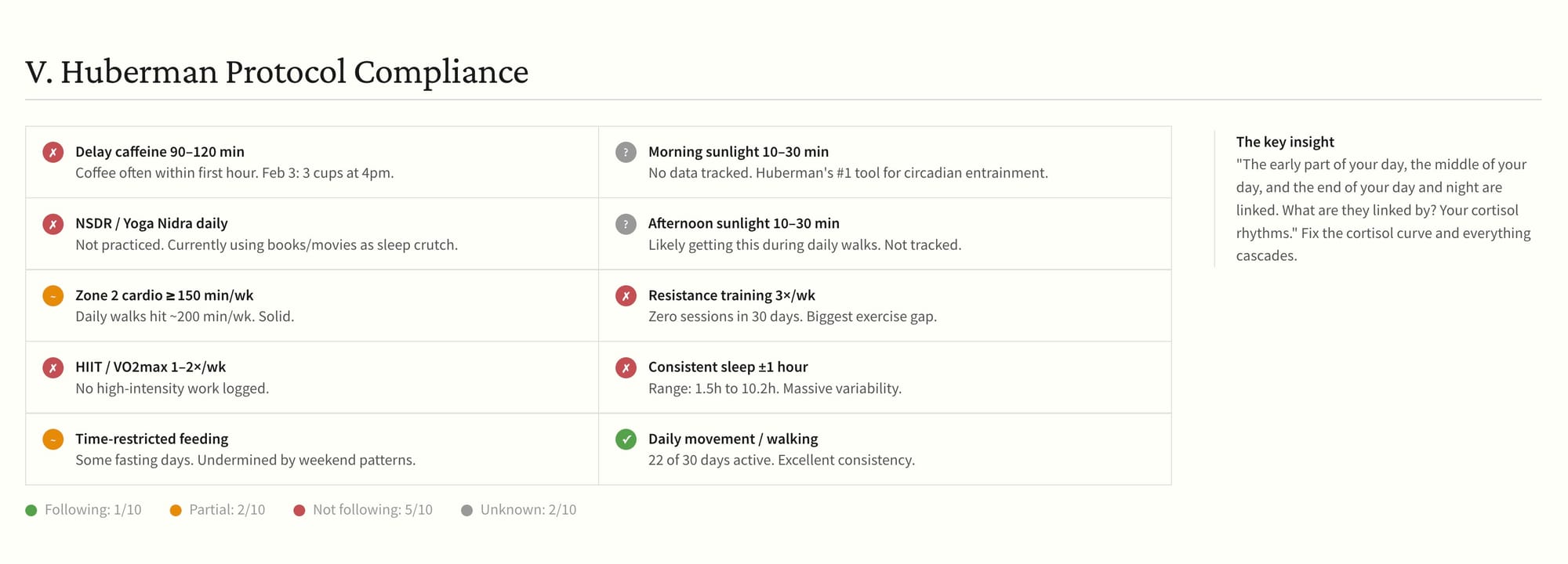
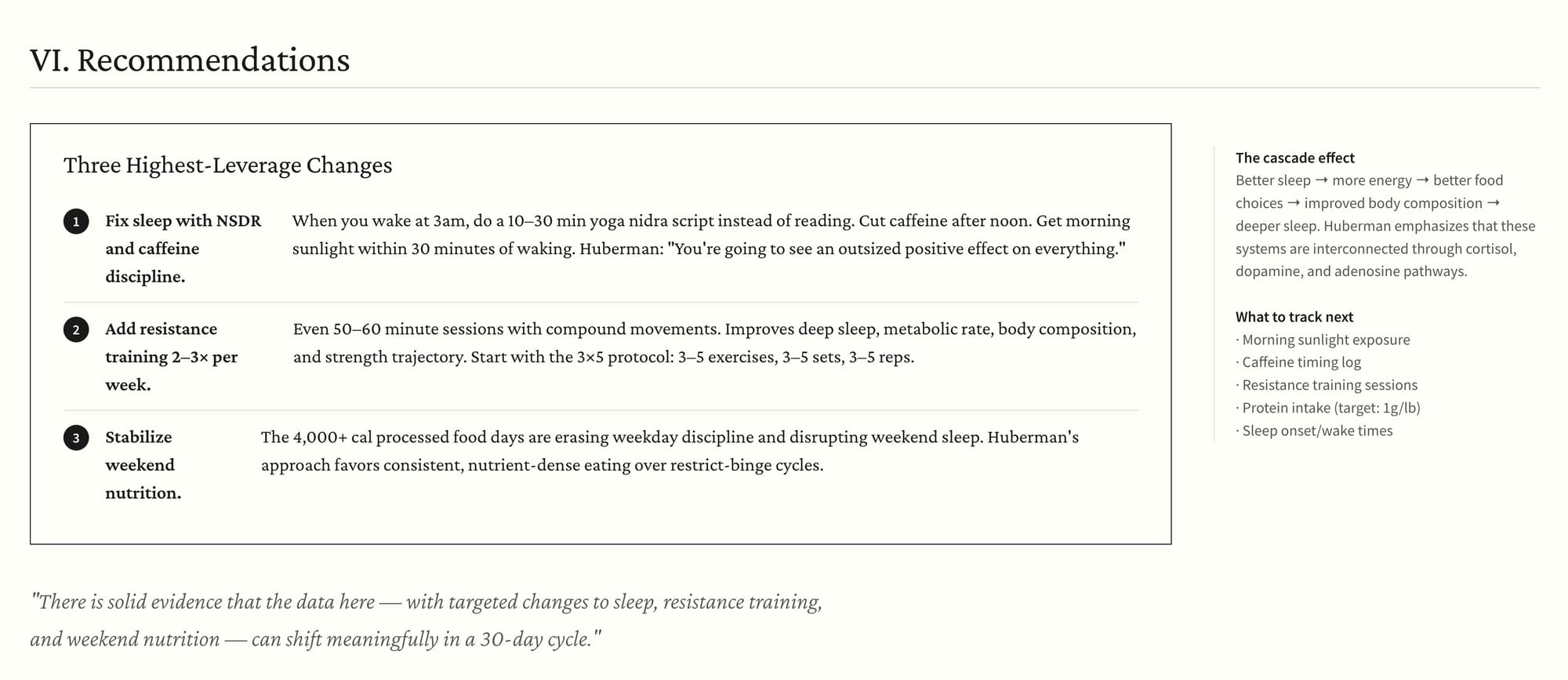
For the mid-night waking: NSDR and Yoga Nidra instead of engaging the brain with reading. Straight from episode transcripts about sleep recovery.
For energy and sleep quality: delay caffeine 90 to 120 minutes after waking, plus a tighter cutoff later in the day. Morning sunlight as the number one circadian anchor.
For the exercise gaps: specific resistance training frequency recommendations and VO2max work that Huberman has discussed across multiple episodes.
All of it retrieved semantically from the actual transcripts. Instead of generic wellness advice I got protocols matched to my specific data.
Noom is valued at $3.7 billion. MyFitnessPal has been acquired twice. Whoop raised $200 million. There are thousands of health and wellness apps in the app store.
They all share the same fundamental limitation. They know your data but they don't know the science. Or they know the science but they don't know your data. None of them cross-reference your personal numbers against a deep expert knowledge base and synthesize personalized protocols.
What Mio just did is something no single health app can do. It combined structured personal data from Arca with a vectorized expert knowledge base and used an LLM to reason across both. The analysis felt like a consultation instead of a wellness checklist.
And it was proactive. Mio reaches out to me regularly with check-ins via text/email and does all the analysis on its own regularly as my data accumulated in Arca. I didn't have to open an app, navigate a dashboard, or remember to check anything.
This is a new capability layer.
The Pattern Evolves
When I wrote "Apps No More" back in November, the pattern was straightforward. Data lives in your vault. Your AI reasons about it using skills. You access it through whatever interface you already use.
When I showed todo apps being replaced, it was reactive. You ask, the AI answers.
When I showed Paperboy replacing research discovery apps, it was semi-proactive. A daily email with papers relevant to your projects.
This health analysis is fully proactive. The AI cross-references your personal data against an expert knowledge base and comes to you with personalized insights. You don't ask for it. It just shows up.
The pattern keeps evolving:
Reactive: "What's due today?" → AI queries your data and responds.
Semi-proactive: AI monitors new information and alerts you when something is relevant.
Fully proactive: AI analyzes your data against expert knowledge and delivers personalized recommendations on a schedule.
Each level replaces a more valuable category of apps. Reactive replaces simple trackers. Semi-proactive replaces discovery tools. Fully proactive replaces the apps people pay serious money for. Health coaching. Financial advising. Personalized education.
What's Under the Hood
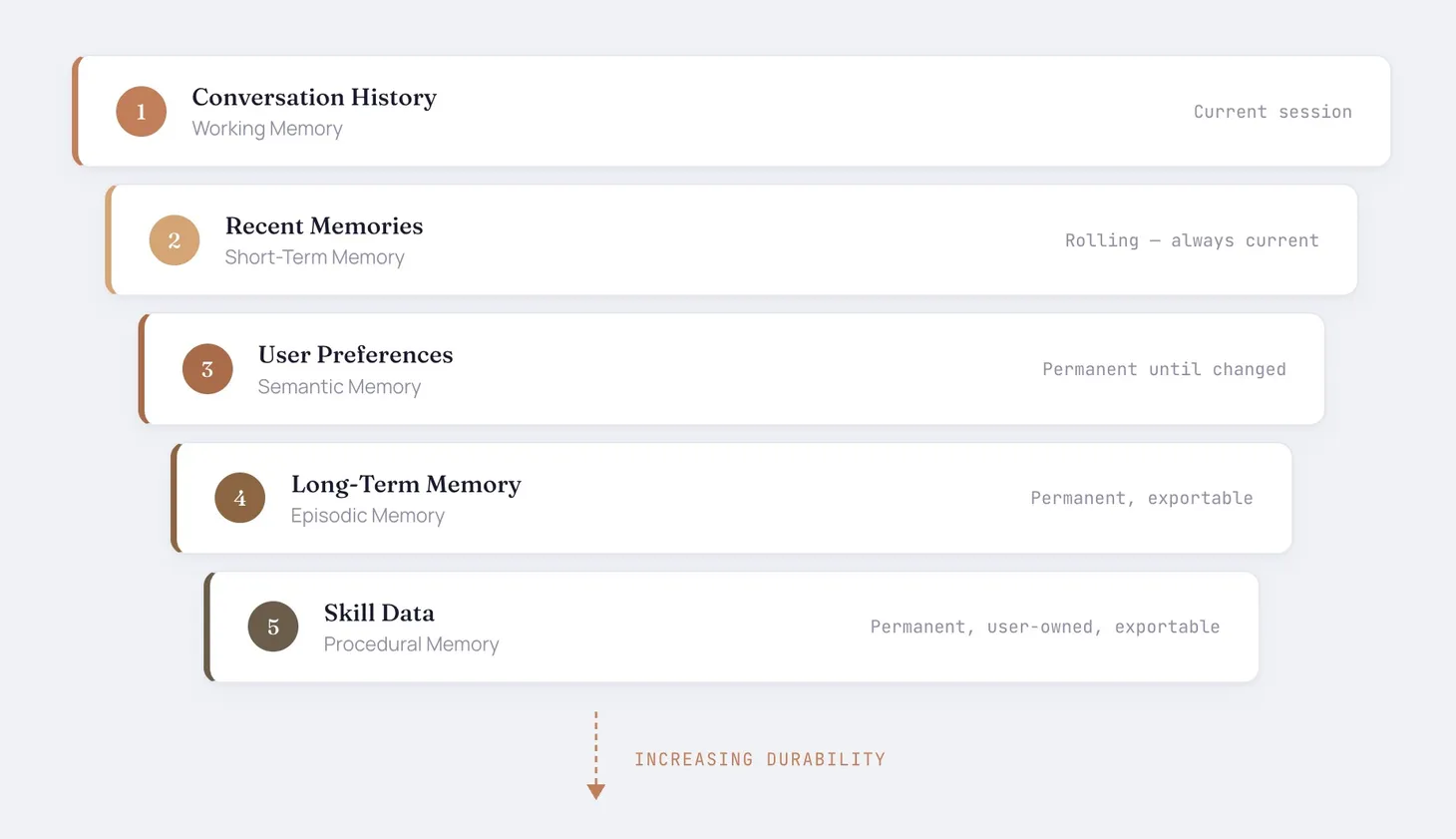
The architecture is the same one I've been writing about since November.
Arca stores my health data as structured tables. Weight, meals, exercise, sleep. All in my private vault. Exportable anytime.
The Huberman transcripts live as vector embeddings in a knowledge base. Mio can search them semantically. Ask about "caffeine timing" and it finds every relevant discussion across 200+ episodes.
Claude 4.6 does the reasoning. It reads my data, searches the knowledge base for relevant protocols, and synthesizes an analysis that connects the two.
Mio orchestrates all of it and delivers the result via email, text, or WhatsApp. On a schedule I set.
The Disruption
Health and wellness apps are a massive market. But they're also one of the markets most vulnerable to this disruption. Because the whole value proposition of a health app is personalized guidance. And personalized guidance is exactly what an LLM does well when it has the right data.
The expensive part used to be building the app. The interface. The tracking features. The recommendation engine. The engagement loops.
Now the expensive part is just the data and the knowledge. Both of which the user can own.
A personal AI with access to your health data and a vectorized knowledge base from the world's best experts can outperform any health app. And you own all of it.
I'm going to keep doing these analyses with different expert knowledge bases. What happens when you cross-reference your financial data against Ray Dalio's principles? Your parenting decisions against developmental psychology research? Your career moves against the collected wisdom of people who've done what you're trying to do?
The pattern works everywhere. And it only gets more powerful as the knowledge bases grow.
Now I just need to actually follow the advice.
Reply to this email if you want to try Mio or if you want to build something like this on top of Arca.
Bora
Maker's Wave Newsletter
Join the newsletter to receive the latest updates in your inbox.